
Vild-Svinet
5.5/10
Photos (8)
Highs and lows
Highs
- Great Lift & Drop
- First half is good
- Good presence and wacky theme
Lows
- Uneventful second half
- Rough in the front row
- Short ride duration
Neither here nor there
- Smoother in back | Rougher in front
The numbers
45mph
Top speed
72ft
Height
1,404ft
Length
1
Inversions
Our review
Introduction
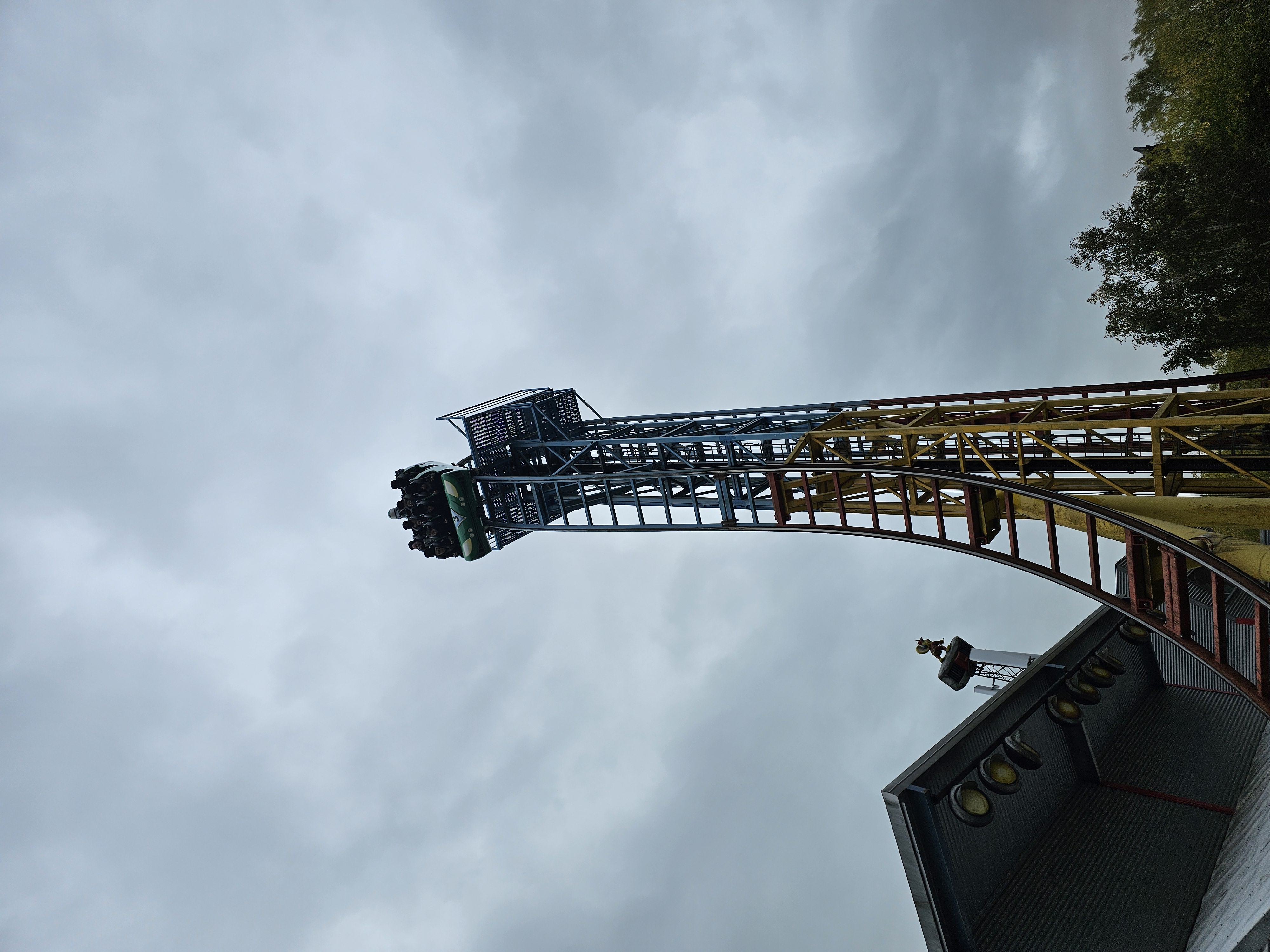
Vild-Svinet is a 2003 Gerstlauer Euro-Fighter at BonBon-Land, Denmark. This is a very historic coaster for the country, as it helped usher in a new era of thrill coasters in Denmark. Previously, the thrill lineup had consisted of three Pinfari loopers and a single Vekoma Boomerang, but the new millennium brought greater ambitions and a thirst for thrills to the small Nordic country. Nothing could fit this better than a never-before-seen concept: a tower with a vertical lift on one side and a beyond-vertical drop on the other. We remember seeing the commercials for this ride as kids, thinking, "No way this is real," but it very much is. In fact, that tower has become Gerstlauer's most recognizable characteristic.
First of its Kind
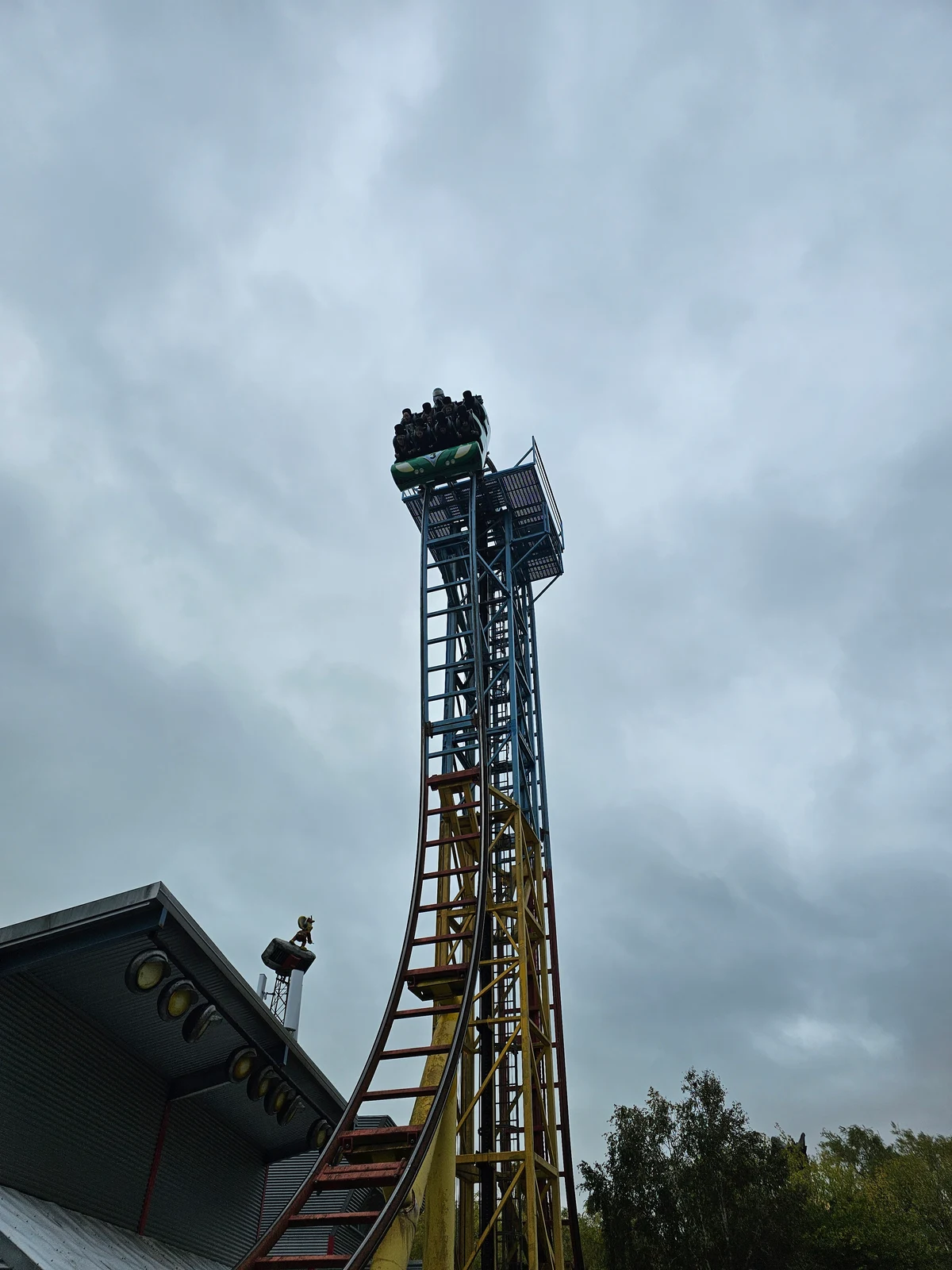
Beyond the Danish borders, Vild-Svinet is historic for several reasons. It wasn't just the first of its kind in Denmark, but it was the very first Euro-Fighter in the world and Gerstlauer's first true thrill coaster. Additionally, its 97-degree drop held the record for the steepest drop in the world until Steel Hawg at Indiana Beach broke it in 2008 with a 111-degree drop. It was a massive risk going with a fairly new, untested manufacturer to debut not only their first thrill coaster and an entirely new ride model, but also a never-before-seen concept. However, given the coaster's popularity throughout the years and what it has done for the park, we can firmly say it was a great choice.
Its unique appeal has perhaps waned over the years as many other Euro-Fighters and compact thrill coasters have been built, and Vild-Svinet isn't even the only Euro-Fighter in Denmark anymore. Yet, after well over 20 years, Vild-Svinet is still going strong, plunging riders down its signature beyond-vertical drop.
The Great Boar Race
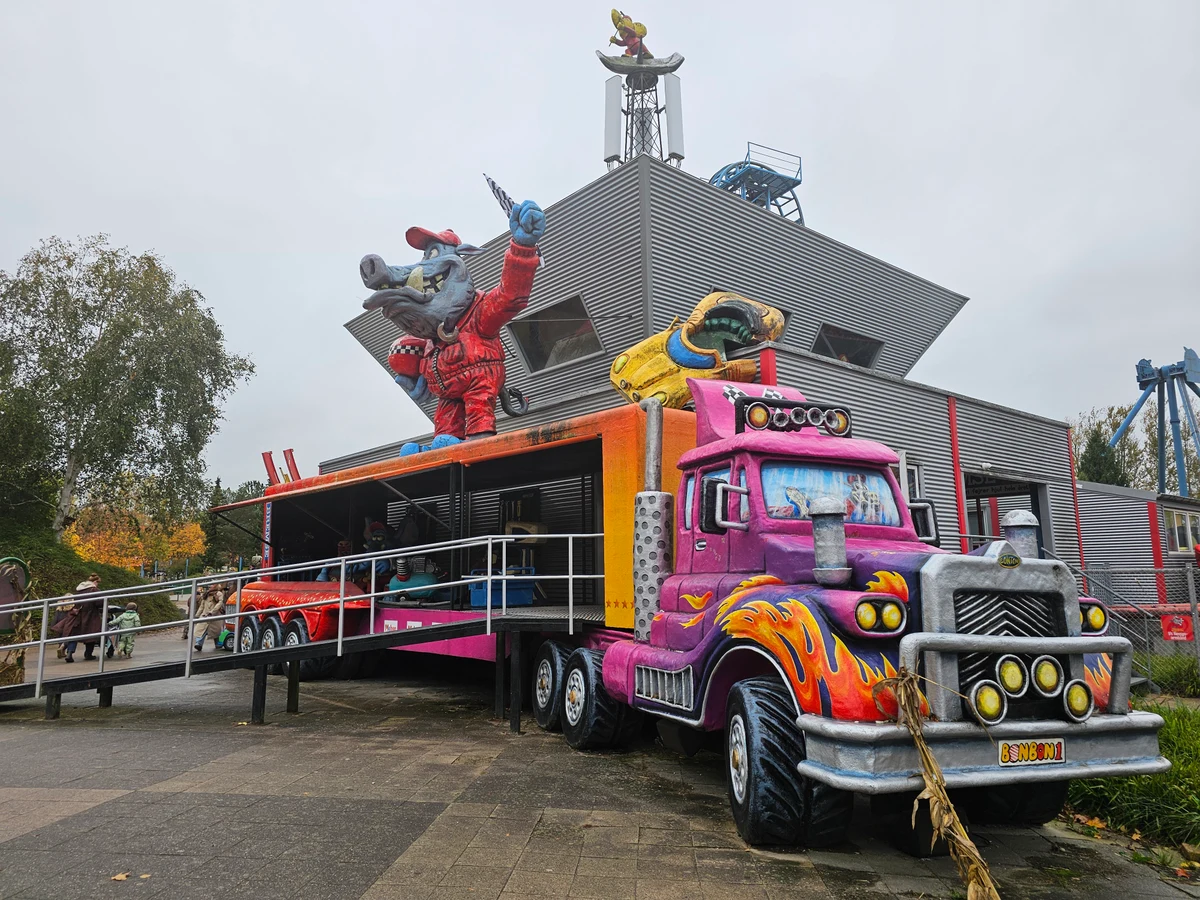
As with many things in BonBon-Land, the theme of Vild-Svinet is very... unique, shall we say. While the name translates to "The Wild Boar," these aren't your typical wild animals. You see, these boars are racing. The station and facade are quite cool, designed to look like a mobile racing station. You enter through a maintenance truck and move into the pit stop area where the cars come in and leave one at a time. It is a great way to utilize the otherwise ugly, bare gravel foundation the ride sits on, and it works much better here than it does for the neighboring coaster, Han-Katten.
There are also several characters, including a boar in its natural habitat, a race car, hanging from the exit of the station. Overall, this is exactly the type of thing we have come to know and love about BonBon-Land: using wacky and unique theming to turn what is otherwise a very boring area into something that works perfectly with their style.
From here, you load into a vehicle and prepare yourself to join the great boar race.
A Ride of its Time
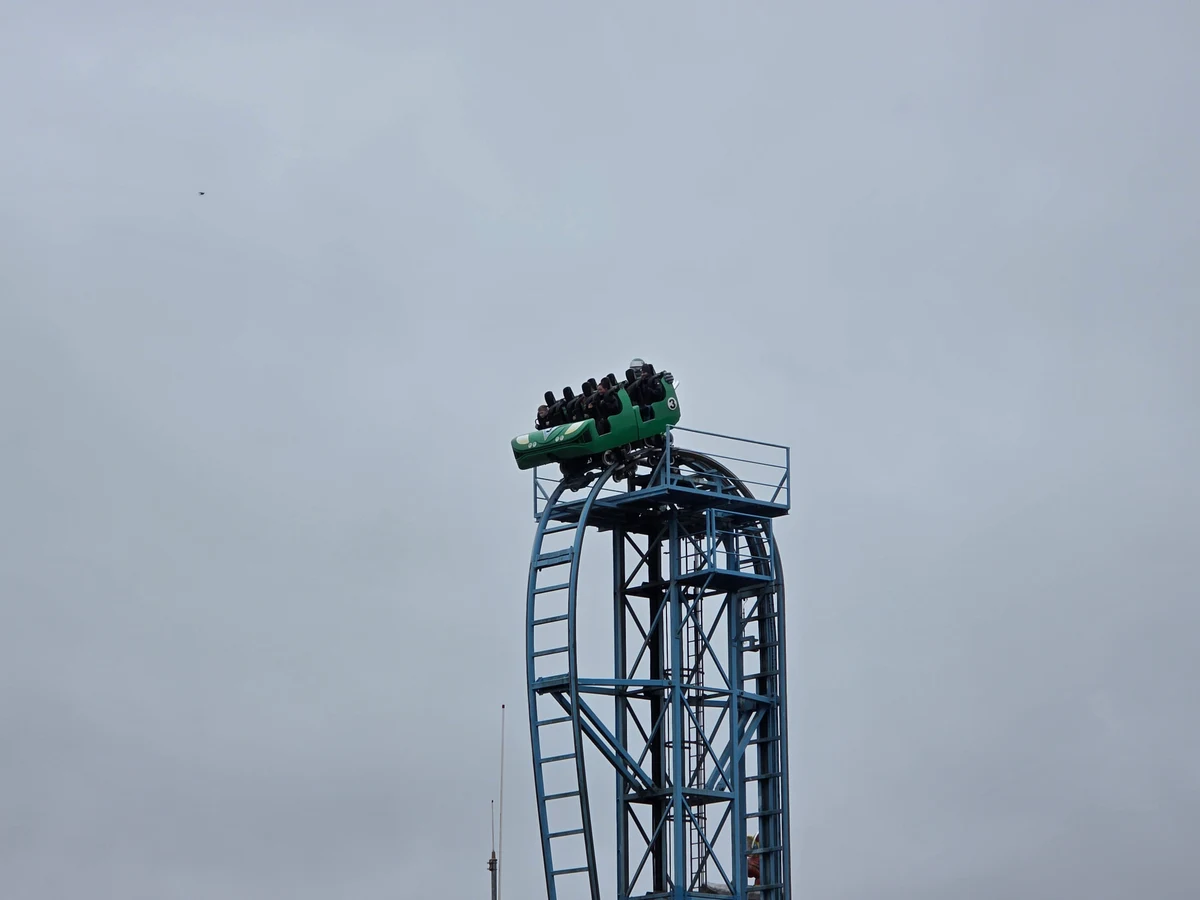
Now, lots of great things have been said about the coaster so far - from its historic impact and daring innovation to its unique theme. However, from a pure ride experience perspective, it doesn't really compare to many modern thrill coasters. Engineering capabilities have improved a lot over the years, even for Gerstlauer themselves. Being their very first thrill coaster, Vild-Svinet really is a ride of its time.
The beginning of the experience is as great as it has always been: you turn a corner and head straight up the vertical lift. This is always a much more exhilarating way to start a coaster compared to a regular lift hill, as the sensation of going straight up at 90 degrees is quite freaky. The following drop is also very potent, especially for a drop well below the 100-foot mark, throwing you out of your seat and up into the big over-the-shoulder restraints (in a good way).
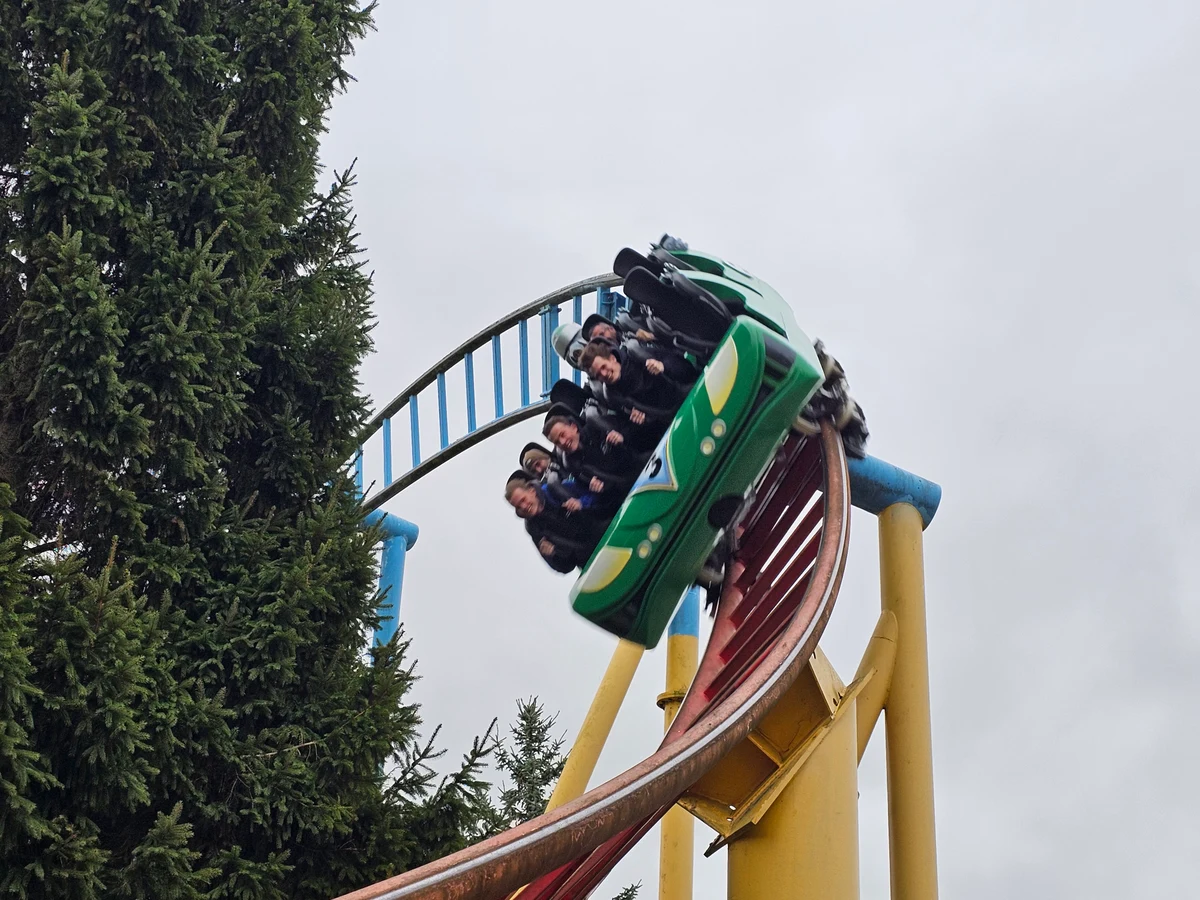
The ride's lone inversion, a classic vertical loop, is also solid as it is both decently forceful and smooth. However, that is about where the layout completely runs out of steam. It spends the remainder of its 1,400 feet of track meandering through some banked turns, doing much of nothing, really. You do get a quick pop of air jumping into the brake run, but the point stands: the entire second half of the coaster is very boring. It is also a lot rougher than the first half, which is weird considering how little happens in this section compared to the first couple of elements.
The Gerstlauer Roughness Conundrum
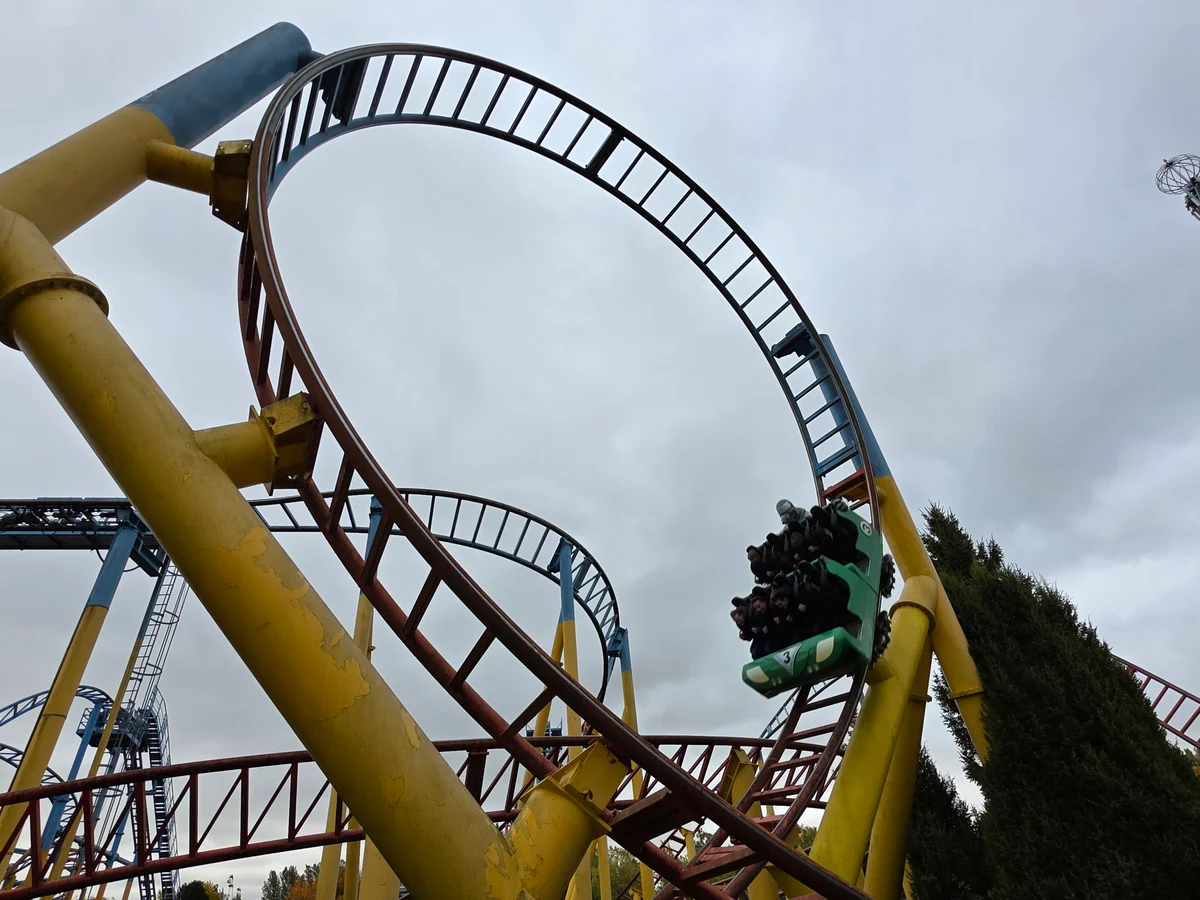
Gerstlauer is often a hotly debated manufacturer, especially when it comes to smoothness. They have managed to make some of the smoothest coasters out there while also having made many rough ones. Even to this day, they still put out the occasional semi-rough Euro-Fighter with big, bulky over-the-shoulder restraints (see Vindfald, a 2024 Euro-Fighter also located in Denmark, which is just as rough as its 21-year-older cousin). This is interesting considering that they have made many thrill coasters that are much bigger and wilder which track considerably smoother and feature extremely comfortable lap bars (like many of their Infinity Coasters). Hell, even Kärnan, one of the most extreme coasters in the world, just uses a lap bar. While Kärnan isn't perfectly smooth, the thrill-to-roughness ratio is night and day compared to something like Vild-Svinet.
Now, where it becomes truly illogical is how the roughness of the ride varies depending on where you sit. You would normally assume that a wooden coaster is rougher when sitting on a seat directly above the wheels, or that most coasters are rougher in the back row. However, none of these rules should be relevant for a vehicle with only two rows. Not only is there still a notable difference between the rows, but somehow it is the back row that is the smoothest and the front row that is the roughest. How they have managed this is a mystery, but the difference is very noticeable. The back row is actually decently smooth all around, while the rattle (and light headbanging) is far more prevalent in the front. You also get a large jolt on one of the turns that only appears when riding in the front row.
This is just one of the many peculiar phenomena of Gerstlauer.
Conclusion

Vild-Svinet is a decent thrill coaster, but it is arguably a better historic novelty than it is a standout attraction in the modern amusement landscape. It has a large presence in the park and a unique, fairly well-done theme. Although most of the track still sits over an ugly gravel foundation, the park makes it work with the industrial racing aesthetic. The vertical lift and beyond-vertical drop are still a great way to start a coaster, but outside of the initial overbank and vertical loop, the pacing completely dies. In classic Gerstlauer fashion, the experience is decently comfortable in the back row but quite rough in the front row, featuring a noticeable jolt on one of the turns. We can still find plenty of enjoyment in a coaster like this, but there is no doubt that many newer thrill coasters have it beat in both smoothness and layout. Still, it is not a ride to be missed, especially if you care about coaster history.
All photos

Adjusting the seats on Helix…